Chernobyl – Season 1 is a five-part historical drama that reconstructs the events of the April 1986 nuclear disaster at the V.I. Lenin Nuclear Power Plant. The narrative initiates with the catastrophic failure of the RBMK-1000 reactor during a late-night safety test and proceeds through the immediate containment efforts and the subsequent scientific inquiry. The series identifies the technical flaws within the Soviet nuclear program and the institutional culture of secrecy that exacerbated the atmospheric and environmental fallout across the Ukrainian Soviet Socialist Republic and beyond.
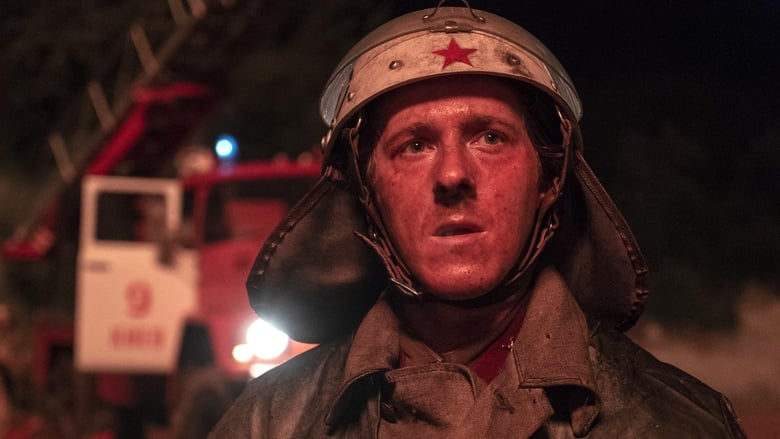
The production utilizes a forensic approach to document the logistical mobilization of the Soviet Union‘s resources to address the crisis. It tracks the collaboration between physicist Valery Legasov and Boris Shcherbina, a high-ranking government official, as they navigate the physical dangers of the radioactive site and the political hazards of the Kremlin. The storyline emphasizes the severe biological consequences for the workers, firefighters, and residents of Pripyat, providing a detailed record of the manual labor required to prevent a secondary thermal explosion that threatened to render large portions of Europe uninhabitable.
Is Chernobyl – Season 1 Safe to Watch? (Age Rating Guide)
Official age rating not available.
Why You Should Watch Chernobyl – Season 1
The primary value of Chernobyl – Season 1 lies in its refusal to utilize traditional disaster tropes, opting instead for a technical and bureaucratic autopsy of a historical failure. It provides a comprehensive breakdown of nuclear physics and the structural vulnerabilities of the RBMK reactor design. The production manages to turn a complex scientific investigation into a structured narrative that highlights the friction between empirical truth and state-mandated narratives. Every element of the series is calculated to reflect the specific conditions of the 1980s Eastern Bloc, from the utilitarian architecture to the rigid social hierarchies within the plant management.
The Mechanics of a Nuclear Meltdown
A significant portion of the series is dedicated to explaining why the reactor exploded, a question that drives the central conflict. The writing uses the character of Ulana Khomyuk to piece together the events in the control room, specifically the actions of Anatoly Dyatlov, Aleksandr Akimov, and Leonid Toptunov. By illustrating the xenon poisoning of the reactor core and the catastrophic effect of the graphite-tipped control rods, the show provides a clear educational framework for understanding the physics of the disaster.
The series illustrates that the explosion was not merely a mechanical failure but a result of human error under institutional pressure. The safety test was conducted by an inexperienced night shift to meet production quotas, creating a sequence of events where safety protocols were systematically bypassed. Johan Renck‘s direction ensures that the technical explanations remain grounded in the physical reality of the power plant, using long, steady shots of the cooling systems and control panels to emphasize the scale of the machinery involved.
Institutional Denial and the Price of Lies
The narrative serves as an analysis of how centralized power structures handle information during a crisis. The character of Boris Shcherbina represents the state’s initial dismissal of the severity of the leak, which delayed the evacuation of Pripyat for 36 hours. This delay exposed thousands of civilians to high levels of Iodine-131 and Cesium-137. The conflict between Valery Legasov‘s scientific urgency and the KGB‘s surveillance highlights the danger of prioritizing national image over public safety.
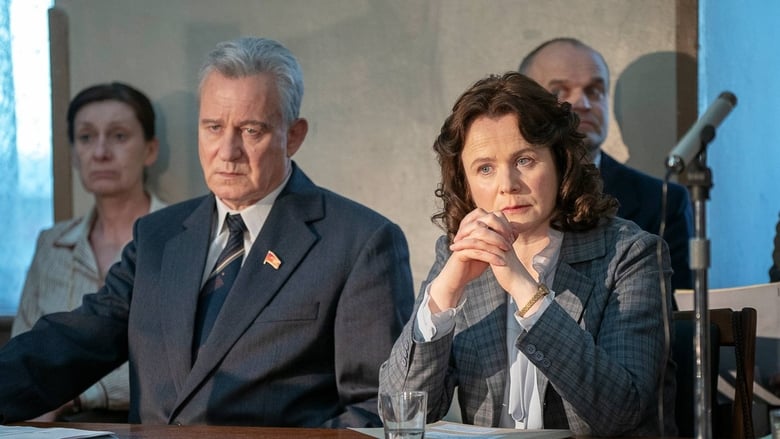
The finale of the season focuses on the legal trial of the plant officials, where Legasov uses colored cards to simplify the complex interactions within the reactor for the court. This sequence serves as the emotional and intellectual climax, where the cost of Soviet secrecy is calculated. It demonstrates that the technical flaw in the AZ-5 emergency shutdown button was known to the state years prior but kept classified to maintain the myth of Soviet industrial perfection. The series argues that the collapse of the truth was as dangerous as the collapse of the reactor core itself.
Decontamination and the Human Cost
The middle episodes document the mobilization of the “liquidators,” a group of approximately 600,000 military and civilian personnel tasked with the cleanup. One specific sub-section focuses on the biorobots, soldiers who were forced to clear highly radioactive graphite from the roof of the reactor by hand because mechanical robots failed in the extreme radiation fields. These sequences are filmed with a cold, observational style that emphasizes the 90-second intervals the men were allowed to spend on the roof to avoid immediate lethal doses.
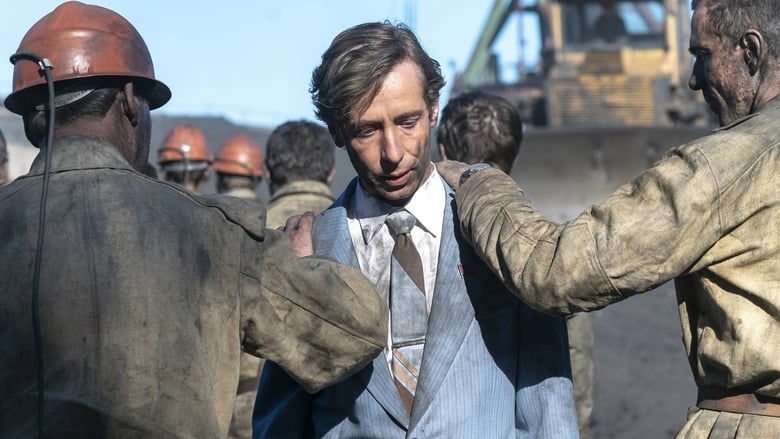
Additional focus is given to the Tula coal miners, who dug a heat exchanger under the reactor without cooling equipment to prevent a meltdown from reaching the water table. Their contribution is framed through the lens of physical labor and the grim recognition of their own impending health issues. The series also tracks the experience of Lyudmilla Ignatenko, whose husband was one of the first firefighters on the scene. Her story provides a factual look at the progression of radiation sickness and the isolation required to manage such a biological hazard.
Authentic Production Design and Soundscapes
The visual and auditory landscape of Chernobyl – Season 1 is a product of rigorous historical research. Filmed largely at the Ignalina Nuclear Power Plant in Lithuania—a decommissioned RBMK facility—the show captures the authentic scale of the Soviet energy infrastructure. The use of muted color palettes and period-accurate costumes reinforces the stark, utilitarian atmosphere of the era. This attention to detail ensures that the setting feels less like a film set and more like a captured piece of historical footage.
The score by Hildur Guðnadóttir was composed using ambient recordings from inside a power plant, incorporating the sounds of humming turbines and industrial echoes rather than traditional musical instruments. This choice creates a pervasive sense of dread that mirrors the invisible threat of radiation. The sound design functions as a constant reminder of the environment’s hostility, effectively conveying the presence of an enemy that cannot be seen or smelled, but only measured with a dosimeter.
| Director | Johan Renck |
|---|---|
| Main Cast | Jared Harris, Stellan Skarsgård, Emily Watson, Paul Ritter, Jessie Buckley |
| Release Year | 2019 |
| Genre | Historical Drama |
Browse more curated picks in Chernobyl and TV Shows.
For verified credits, release details, or official resources, visit IMDb and Official Site.
Frequently Asked Questions
When was Chernobyl – Season 1 released?
Chernobyl – Season 1 was released on May 6, 2019.
What is Chernobyl – Season 1 about?
Chernobyl – Season 1 is a five-part historical drama that reconstructs the events of the April 1986 nuclear disaster at the V.I. Lenin Nuclear Power Plant.
Where can I watch Chernobyl – Season 1?
Chernobyl – Season 1 is available on Amazon Video, Apple TV, and Fandango At Home.