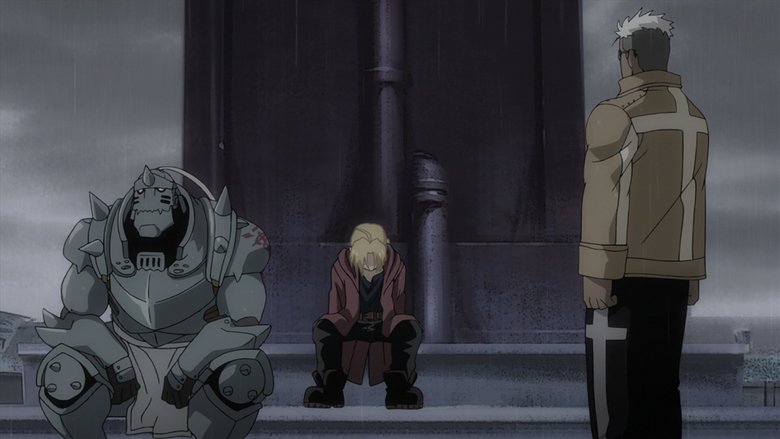
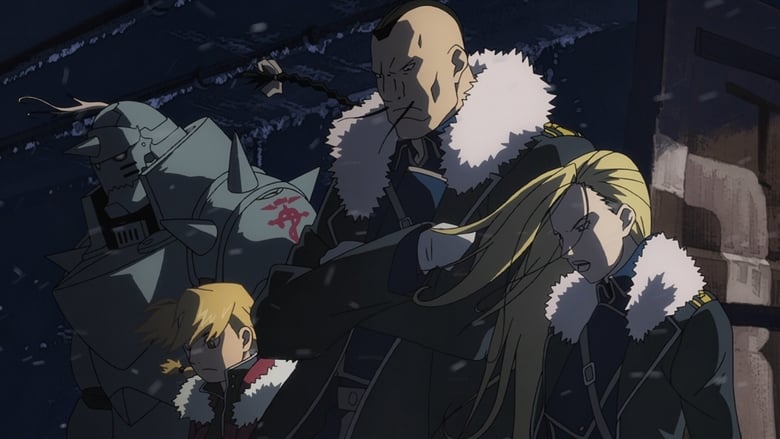
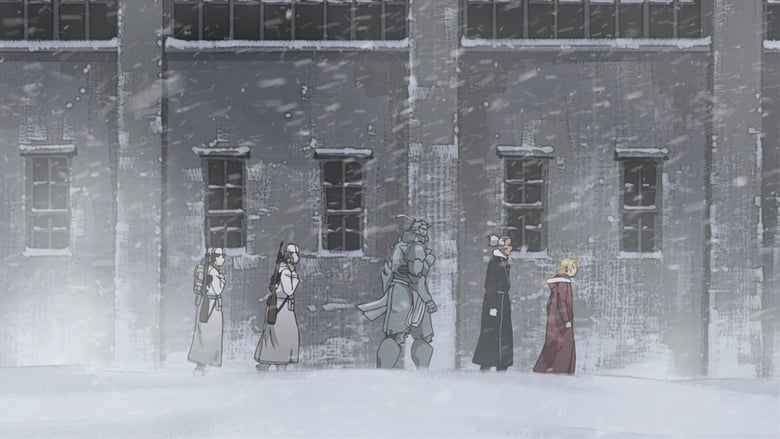
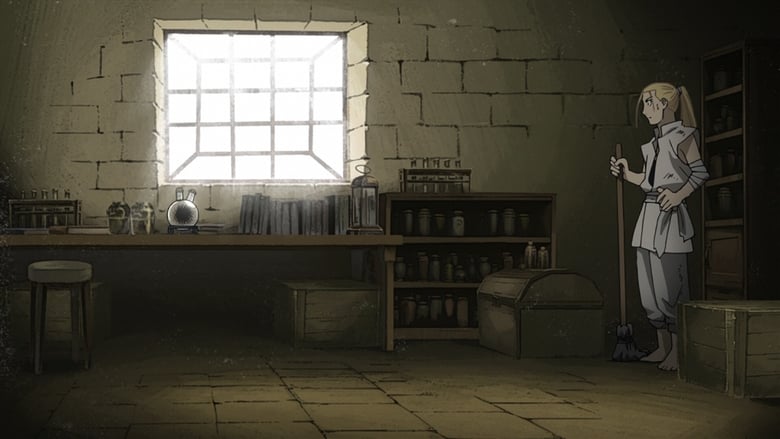
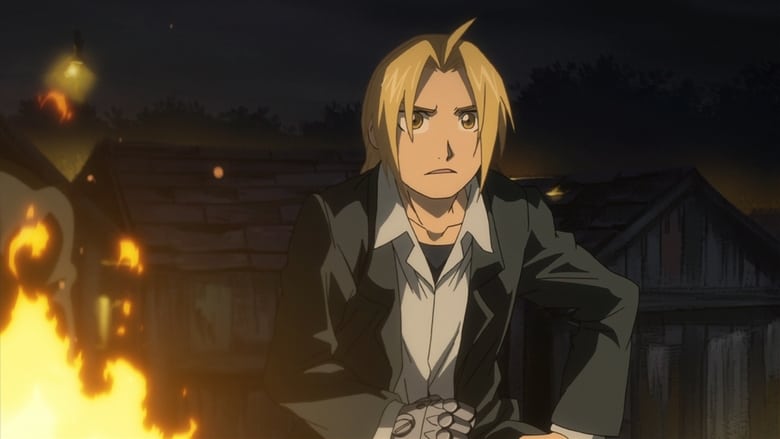
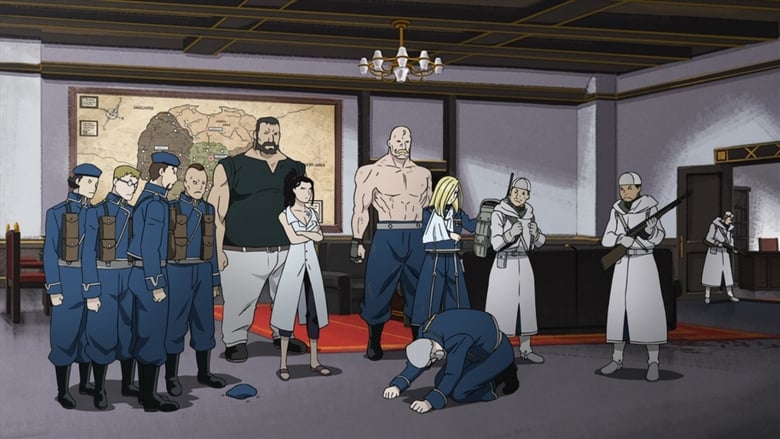
Fullmetal Alchemist: Brotherhood – Season 1 introduces the nation of Amestris, a militarized state where the science of alchemy is governed by the law of Equivalent Exchange. The story follows Edward Elric and Alphonse Elric, two brothers who suffered severe physical consequences after attempting to resurrect their mother through a forbidden alchemical ritual. Edward, known as the Fullmetal Alchemist, serves as a State Alchemist within the military, utilizing his position to seek the Philosopher’s Stone, a legendary artifact that allegedly bypasses alchemical laws. Their journey begins with a search for restoration, leading them across a landscape defined by industrial advancement and underlying political instability.
The first season establishes the mechanical and philosophical constraints of this world while exploring the consequences of scientific overreach. The narrative shifts from the Elrics’ childhood trauma to their professional investigations into various anomalies, including the activities of Father Cornello and the unethical research of Shou Tucker. These early encounters serve to illustrate the diverse applications and moral failures associated with alchemical power. As the brothers move closer to the center of government in Central City, they find themselves caught between the military’s internal power struggles and a series of murders targeting State Alchemists.
The Framework of Equivalent Exchange
The concept of Equivalent Exchange dictates that humanity cannot gain anything without first giving something in return. In the context of Fullmetal Alchemist: Brotherhood – Season 1, this law serves as both a physical constraint and a narrative theme. Edward Elric and Alphonse Elric represent the extreme failure to adhere to this principle, as their attempt to create human life resulted in the loss of Edward’s limbs and Alphonse’s entire body. This loss is not merely physical; it is a permanent reminder of the limits of human knowledge and the dangers of playing God.
The season meticulously details how this principle influences the daily lives of citizens in Amestris. Alchemy is not portrayed as magic but as a rigorous science involving transmutation circles and chemical composition. This grounded approach ensures that conflicts are resolved through logic and specialized knowledge rather than convenient plot devices. The technical nature of Edward’s prosthetic limbs, known as Automail, further emphasizes the intersection of biology and machinery within this setting.
Character Motivations and Internal Conflict
Edward Elric is driven by a singular sense of responsibility for his brother’s condition. His decision to become a “dog of the military” as a State Alchemist is a pragmatic choice to access restricted research materials. This creates a friction between his personal morals and his professional obligations to a government that often prioritizes warfare over welfare. Edward’s personality is characterized by a combination of intellectual arrogance and deep-seated vulnerability, particularly regarding his short stature and his role in the family tragedy.
Alphonse Elric, though lacking a physical body, provides the emotional grounding for the duo. His existence as a soul bound to a 14-foot suit of armor raises existential questions about the nature of identity and humanity. Throughout the first season, Alphonse struggles with the sensory deprivation of his current form, unable to eat, sleep, or feel physical touch. His motivation is focused on regaining his physical self while preventing Edward from taking further unnecessary risks in their pursuit of the Philosopher’s Stone.
The Shadow of the Ishval Civil War
The history of Amestris is heavily influenced by the Ishval Civil War, a conflict that serves as the backstory for several key figures. Colonel Roy Mustang, an ambitious officer with the title of Flame Alchemist, is deeply impacted by his participation in the war. His motivation to reach the rank of Fuhrer is rooted in a desire to reform the military and prevent further genocidal campaigns. His relationship with his subordinate, Riza Hawkeye, is defined by mutual trust and the shared burden of their past actions in Ishval.
This historical context introduces the antagonist known as Scar, a survivor of the Ishvalan people. Scar views alchemy as a blasphemy against the creator and seeks to eliminate all State Alchemists as an act of divine retribution. His presence adds a layer of complexity to the season, as his motivations are tied to systemic oppression and the cyclical nature of violence. Scar’s techniques, which involve stopping an alchemical reaction at the destruction phase, prove to be a significant threat to Edward’s more constructive alchemical style.
The Emergence of the Homunculi
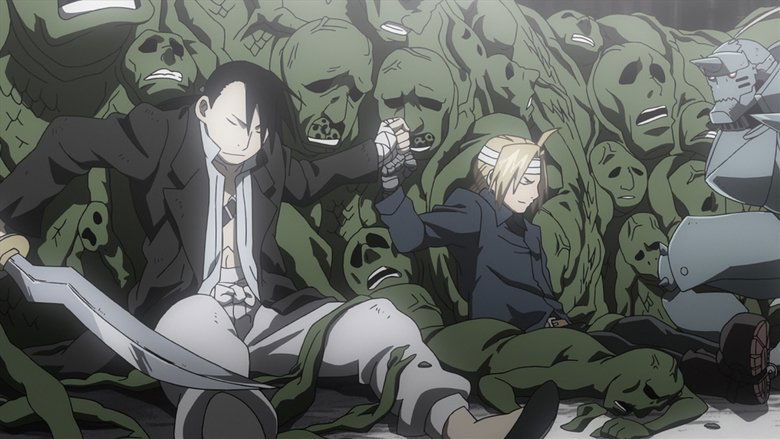
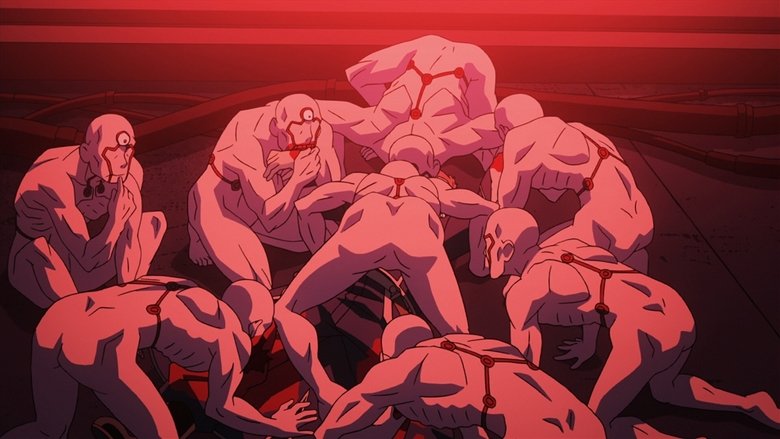
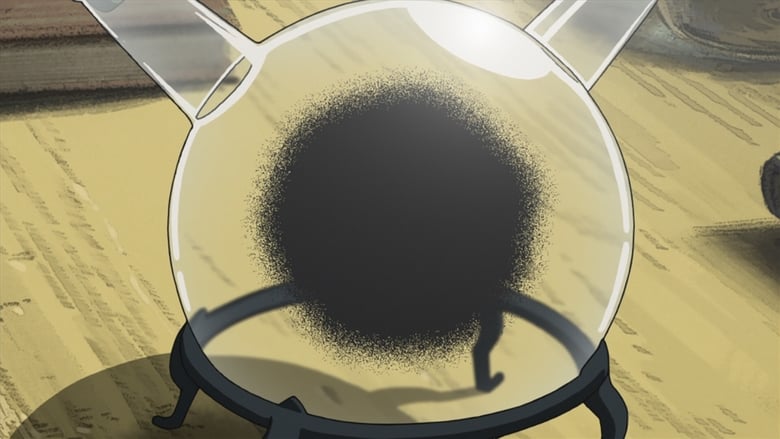
The season introduces the Homunculi, artificial humans named after the seven deadly sins, who operate from the shadows of Central City. Figures such as Lust, Envy, and Gluttony are shown manipulating events to facilitate the creation of a Philosopher’s Stone. Their involvement in Laboratory 5 reveals that the military government is complicit in unethical experiments involving human souls. This discovery shifts the scale of the story from a personal quest to a national conspiracy.
The Homunculi possess unique abilities, such as regenerative healing and physical shapeshifting, which make them formidable opponents for the Elric brothers. Their lack of human empathy and their long-term planning suggest that the current state of Amestris is a curated environment designed for a specific alchemical purpose. The investigation into their origins leads the brothers into a dangerous web of espionage that involves high-ranking military officials and the very foundations of the state.
Why You Should Watch Fullmetal Alchemist: Brotherhood – Season 1
Fullmetal Alchemist: Brotherhood – Season 1 is a precise adaptation of Hiromu Arakawa’s original manga, prioritizing narrative consistency and logical world-building. The series avoids typical genre tropes by grounding its supernatural elements in scientific law and political reality. Studio Bones provides high-quality animation that maintains clarity during complex combat sequences and emotional depth during character-driven moments.
- Consistent Logic: The law of Equivalent Exchange ensures that every action has a tangible cost, maintaining high stakes.
- Complex Antagonists: Villains like Scar and the Homunculi have clear, non-generic motivations tied to the world’s history.
- Technical Design: The integration of Automail and alchemy creates a distinct industrial aesthetic.
- Political Intrigue: The plot explores the dark side of a military-led government and the ethics of scientific research.
- Character Depth: The relationship between Edward and Alphonse is central to the emotional weight of the series.
Is Fullmetal Alchemist: Brotherhood – Season 1 Safe to Watch? (Age Rating Guide)
Official age rating not available.
Browse more curated picks in Fullmetal Alchemist: Brotherhood and TV Shows.
For verified credits, release details, or official resources, visit IMDb and Official Site.
| Director | Not available |
|---|---|
| Main Cast | Romi Park, Rie Kugimiya, Shin-ichiro Miki, Fumiko Orikasa, Megumi Takamoto |
| Release Year | 2009 |
| Genre | Action & Adventure, Animation, Drama |
Frequently Asked Questions
When was Fullmetal Alchemist: Brotherhood – Season 1 released?
Fullmetal Alchemist: Brotherhood – Season 1 was released on April 5, 2009.
What is Fullmetal Alchemist: Brotherhood – Season 1 about?
Fullmetal Alchemist: Brotherhood – Season 1 is available on Flixr.
Where can I watch Fullmetal Alchemist: Brotherhood – Season 1?
Fullmetal Alchemist: Brotherhood – Season 1 is available on Amasian TV, Crunchyroll, and Crunchyroll Amazon Channel.