Attack on Titan – Season 1: A Study in Existential Survival
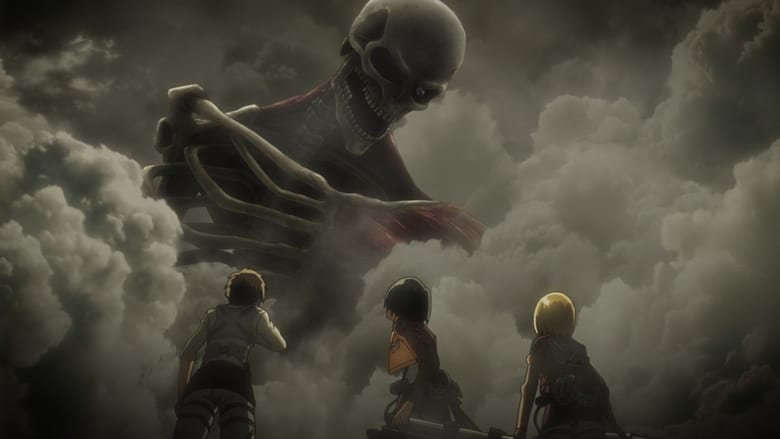
Attack on Titan – Season 1 establishes a claustrophobic setting where the remains of human civilization are confined within three massive stone walls: Wall Maria, Wall Rose, and Wall Sina. This defensive perimeter has protected humanity for over a century from the Titans, a race of giant humanoid creatures that consume humans without apparent biological necessity. The fragile peace ends when a 60-meter Colossal Titan and an Armored Titan breach the outermost gate of Shiganshina District, leading to a catastrophic loss of territory and the displacement of thousands of survivors into the inner territories.
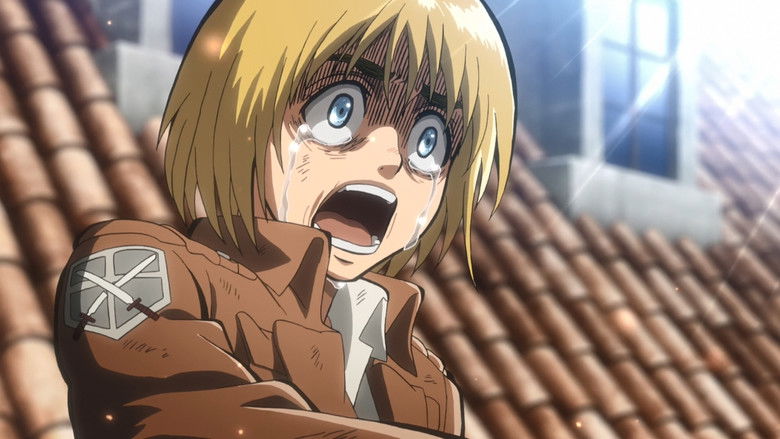
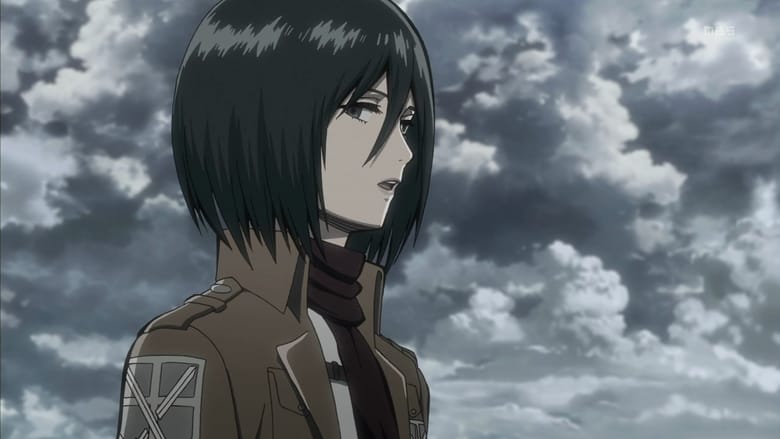
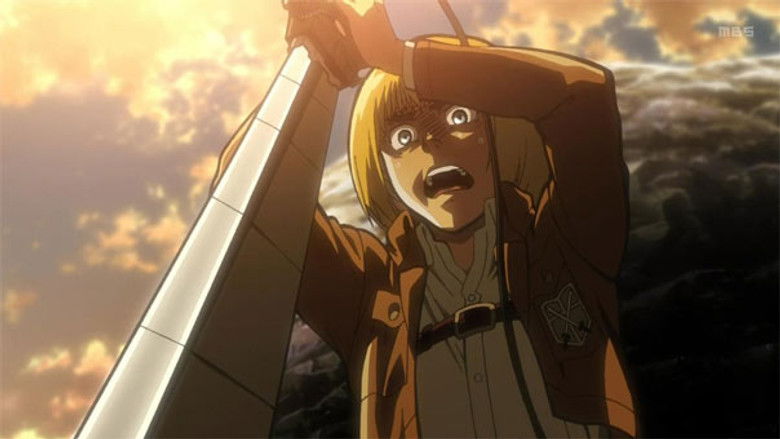
The narrative focuses on Eren Yeager, his adoptive sister Mikasa Ackerman, and their strategist friend Armin Arlert. Following the death of his mother during the initial breach, Eren Yeager enlists in the 104th Cadet Corps with the intent of joining the Survey Corps, a military branch dedicated to reclaiming territory and investigating Titan origins. The season details their rigorous military training, the subsequent defense of the Trost District, and a high-stakes expedition into the exterior lands to uncover the secrets hidden within the Yeager family basement.
Why You Should Watch Attack on Titan – Season 1
The Logistics of High-Altitude Combat
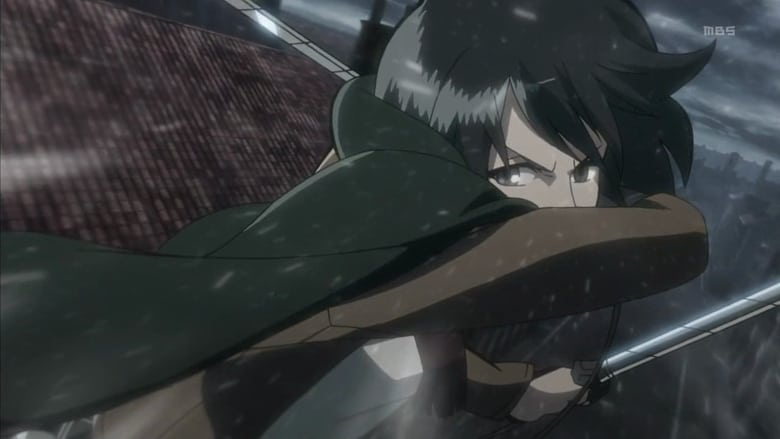
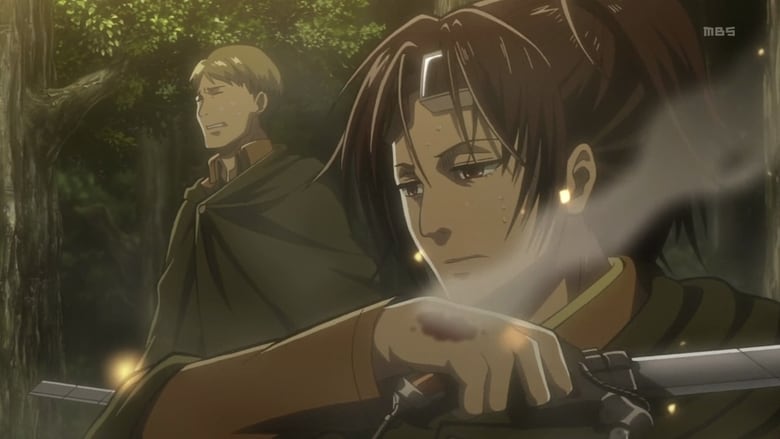
One of the primary technical distinctions of Attack on Titan – Season 1 is the implementation of Omni-Directional Mobility Gear (ODM gear). This fictional technology utilizes gas-powered wire hooks and replaceable steel blades to allow soldiers to navigate three-dimensional urban and forest environments. The animation by Wit Studio, supervised by Tetsuro Araki, emphasizes the physical strain and mechanical limitations of this equipment. Soldiers must constantly monitor gas levels and blade sharpness, which adds a layer of logistical realism to the combat sequences.
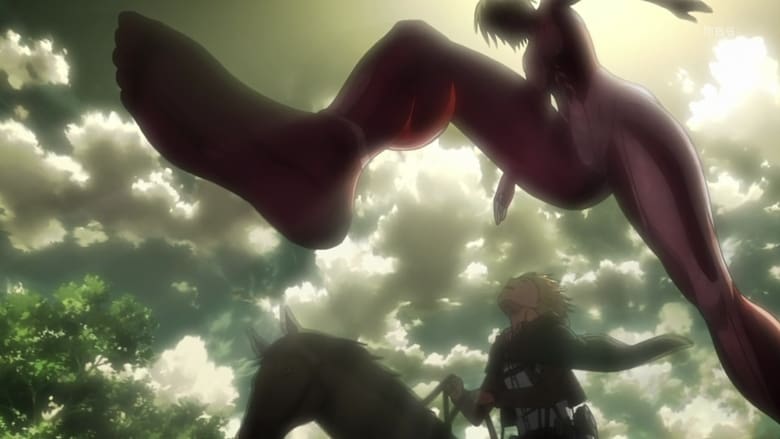
The combat choreography focuses on the biological weakness of the Titans: the nape of the neck. This specific anatomical vulnerability necessitates high-risk, close-quarters maneuvers that often result in significant casualties. The series portrays these encounters not as heroic feats, but as desperate, calculated gambles. The tactical variations between the Garrison, who handle wall defense, and the Survey Corps, who engage in scouting formations, provide a grounded look at how a military must adapt to a physically superior predator.
Structural World-Building and Social Stratification
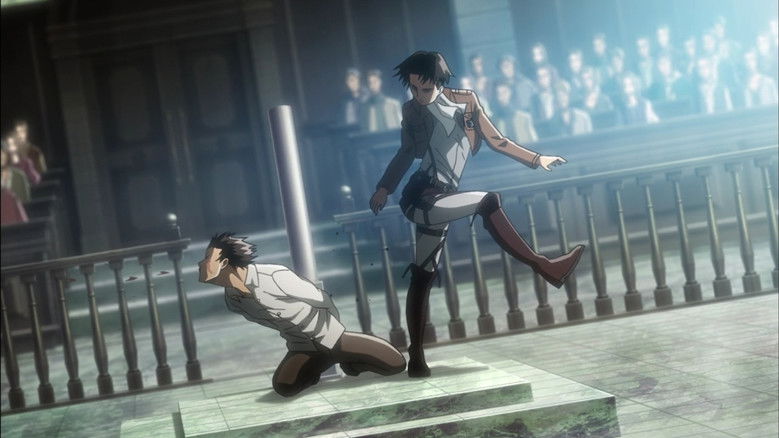
The geography of the walls serves as a literal representation of social class within the series. Wall Maria, the outermost ring, houses the agrarian and working-class populations, while Wall Sina protects the monarchy and the wealthy elite. The loss of Wall Maria in the first episode triggers a food shortage and an internal refugee crisis, highlighting the fragility of the social contract. The military itself is divided into factions with conflicting interests, from the corrupt Military Police to the pragmatic and often sacrificial Survey Corps led by Erwin Smith.
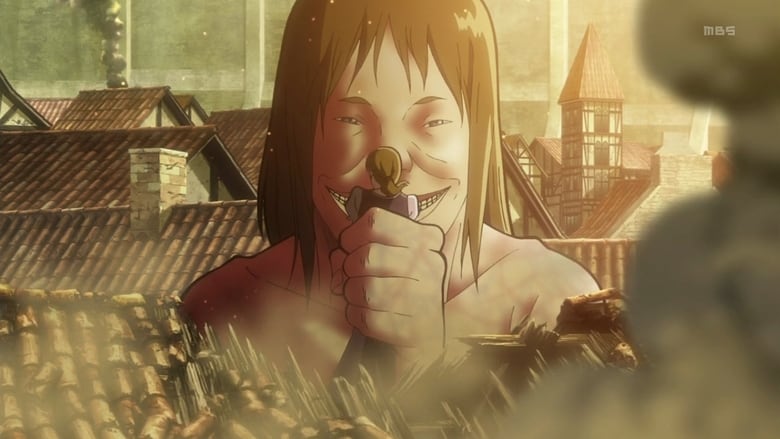
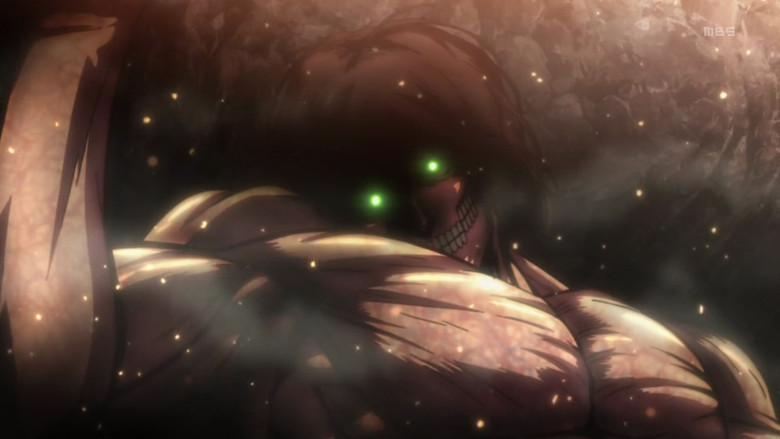
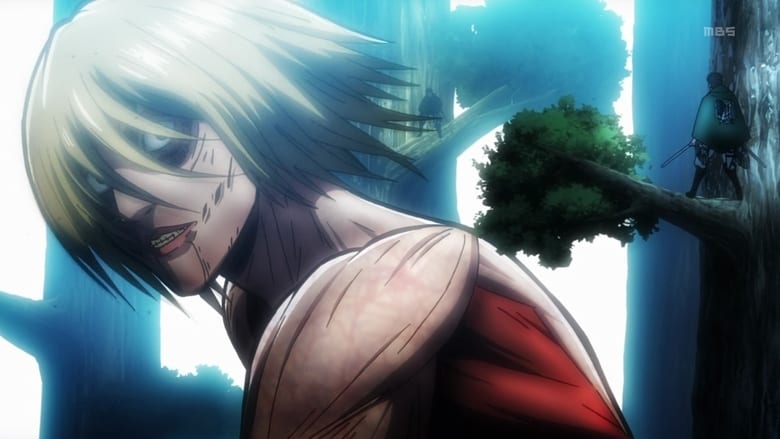
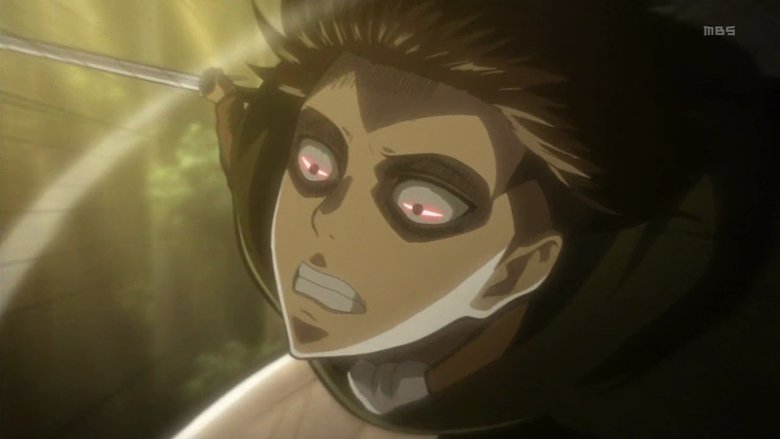
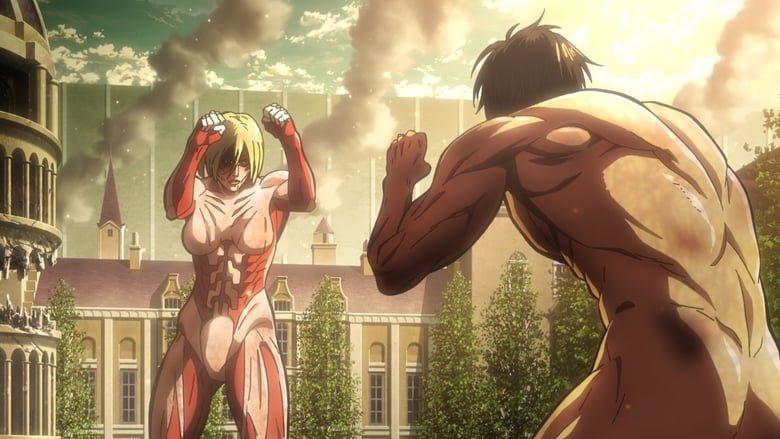
This societal structure is reinforced by the mystery of the Titans themselves. The lack of knowledge regarding their reproduction, origins, or intelligence creates a pervasive sense of dread. The introduction of the Female Titan during the second half of the season shifts the conflict from a survival horror scenario to a tactical intelligence war. The realization that Titans may exist within the human population introduces themes of domestic espionage and political paranoia that define the latter half of the season.
Production Value and Artistic Direction
The visual identity of Attack on Titan – Season 1 is characterized by heavy, high-contrast outlines and a muted color palette that reflects the bleak tone of the narrative. Wit Studio utilized dynamic camera movements to simulate the perspective of soldiers using ODM gear, creating a sense of speed and vertigo that was unconventional for television animation at the time. The scale of the Titans is consistently maintained, ensuring that the human characters always appear vulnerable in comparison to their environment.
The auditory experience is anchored by the orchestral score of Hiroyuki Sawano. The music utilizes choral arrangements and aggressive percussion to underscore the operatic scale of the human tragedy. The score does not merely accompany the action but dictates the emotional pacing, often transitioning abruptly from triumphant themes to silence or discordance to reflect the sudden death of key characters. This synergy between visual and sound design establishes the series as a standard for dark fantasy production.
- Military Realism: Detailed focus on supply lines, equipment maintenance, and chain of command.
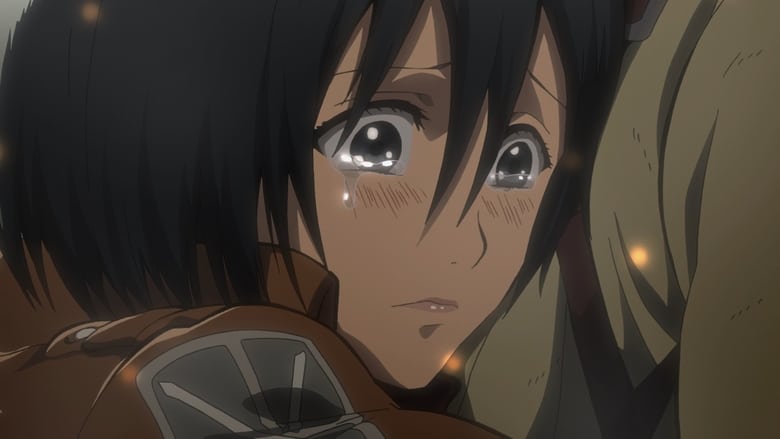
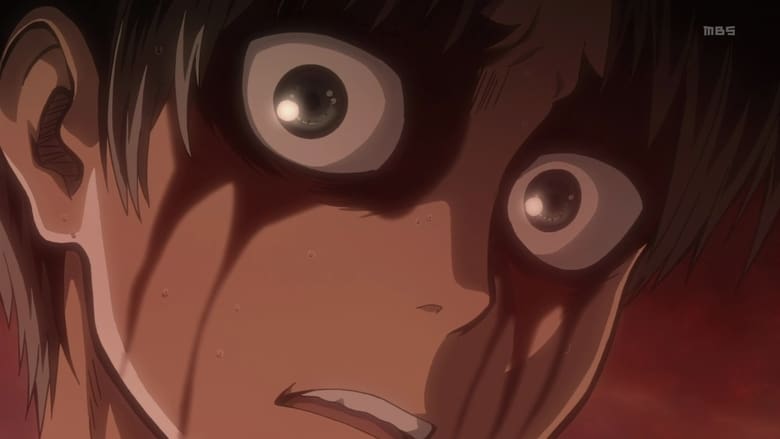
- Psychological Depth: Exploration of trauma, fear-induced paralysis, and the ethics of sacrifice.
- Narrative Pacing: A structured progression from individual survival to large-scale military operations.
- Antagonistic Mystery: The shift from mindless monsters to intelligent, coordinated threats.
Is Attack on Titan – Season 1 Safe to Watch? (Age Rating Guide)
Official age rating not available.
Browse more curated picks in Attack on Titan and TV Shows.
For verified credits, release details, or official resources, visit IMDb and Official Site.
| Director | Not available |
|---|---|
| Main Cast | Yuki Kaji, Yui Ishikawa, Marina Inoue, Kisho Taniyama, Hiro Shimono |
| Release Year | 2013 |
| Genre | Action & Adventure, Animation, Sci-Fi & Fantasy |
Frequently Asked Questions
When was Attack on Titan – Season 1 released?
Attack on Titan – Season 1 was released on April 7, 2013.
What is Attack on Titan – Season 1 about?
Attack on Titan – Season 1: A Study in Existential SurvivalAttack on Titan – Season 1 establishes a claustrophobic setting where the remains of human civilization are confined within three massive stone walls: Wall Maria, Wall Rose, and Wall Sina.
Where can I watch Attack on Titan – Season 1?
Attack on Titan – Season 1 is available on Amazon Video, Apple TV, and Crunchyroll.