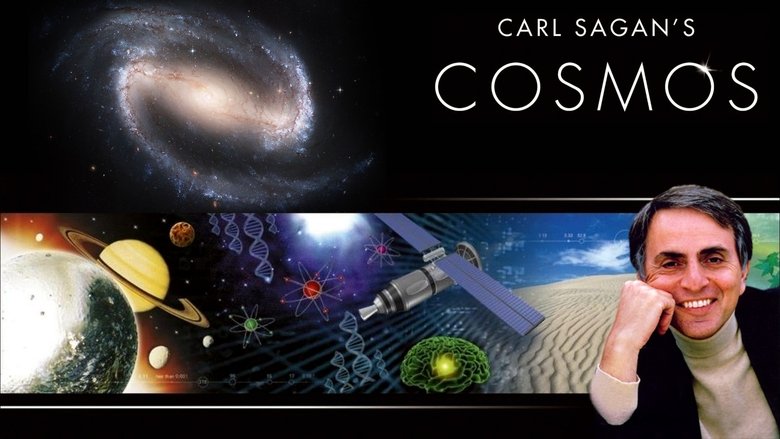
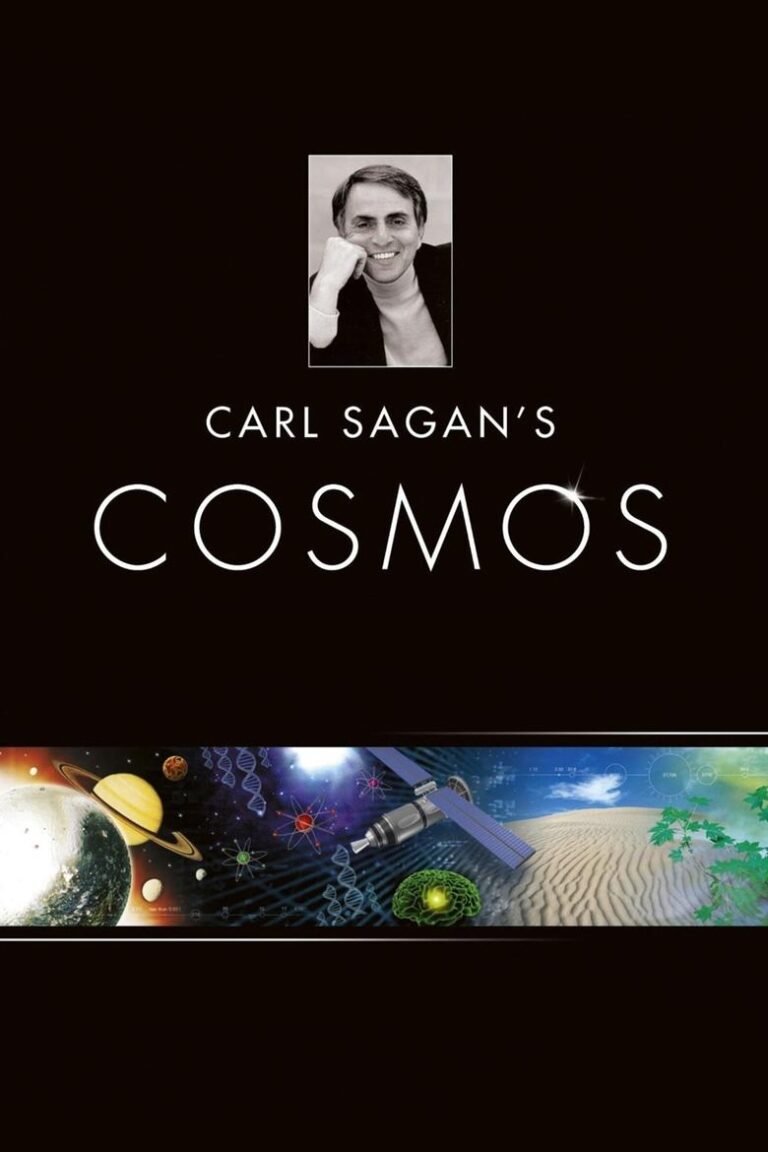
Cosmos: A Personal Voyage – Season 0 represents the 1989 Special Edition updates to the original 1980 series. These segments were produced by KCET to account for the decade of scientific advancement that followed the initial broadcast. Carl Sagan returns to provide necessary corrections and additional context for the original thirteen episodes.
The production features Carl Sagan in a contemporary setting, often a study or a studio, addressing the camera directly to update the audience on new astronomical discoveries. These additions ensure that the series remained relevant for a late-1980s television audience. The tone is strictly educational, focusing on the revision of earlier hypotheses based on data from NASA missions and planetary probes.
Cosmos: A Personal Voyage – Season 0 Plot Summary
The content of Cosmos: A Personal Voyage – Season 0 is structured as a series of supplemental updates. These updates focus heavily on the data gathered by the Voyager 2 spacecraft during its encounters with Uranus in 1986 and Neptune in 1989. Carl Sagan explains how these missions revealed the magnetic fields, ring systems, and unique moons of the outer gas giants.
Planetary Science Revisions
In these segments, Carl Sagan revisits the discussion on Mars. He provides a retrospective on the Viking lander results, explaining why the initial detection of organic-like chemistry did not confirm life. He also highlights the progress in understanding the Greenhouse Effect on Venus, using it as a direct warning for Earth‘s rising carbon dioxide levels.
The 1989 updates also cover the following areas:
- The 1986 appearance of Comet Halley and its composition as a “dirty snowball.”
- Advancements in SETI technology, specifically the META project.
- The discovery of Ozone depletion over Antarctica and its implications for planetary survival.
- The tragic loss of the Space Shuttle Challenger and its impact on human space exploration.
Geopolitical and Scientific Overlap
Beyond astronomy, the updates include deep analysis of the Nuclear Winter theory. Carl Sagan discusses the scientific consensus that emerged in the mid-1980s regarding the climatic consequences of nuclear war. He frames this research as a necessary extension of atmospheric studies conducted on other planets.
Cosmos: A Personal Voyage – Season 0 Cast, Characters, and Arc
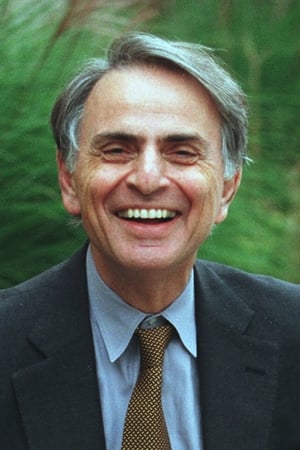
Carl Sagan is the sole presenter and central figure of these updates. His role is to serve as the scientific conscience of the series, bridge the gap between 1980 and 1989. He does not play a character but acts as a guide to the shifting landscape of human knowledge.
The Evolution of the Narrator
The “arc” of these segments is one of professional self-correction. Carl Sagan demonstrates the scientific method by openly acknowledging where his 1980 predictions were limited by available technology. This creates a narrative of progress, showing how the “shores of the cosmic ocean” have been further explored through robotic exploration and refined mathematics.
Specific cast details for these updates include:
- Carl Sagan: Presenter and Co-writer.
- Ann Druyan: Co-writer and Producer.
- Steven Soter: Co-writer and Researcher.
How Cosmos: A Personal Voyage – Season 0 Fits the Series
Cosmos: A Personal Voyage – Season 0 serves as a bridge between the original 1980 broadcast and modern scientific literacy. It is technically categorized as a collection of additions for the 1989 Special Edition home video and television re-release. These segments are often appended to the beginning or end of the original episodes to provide a factual safety net.
By incorporating these updates, the series creators addressed the ephemeral nature of scientific data. It allowed Cosmos to maintain its educational authority throughout the 1990s. This set of content solidified the show’s reputation for being more than just a historical artifact; it became a living document of human discovery.
Why You Should Watch Cosmos: A Personal Voyage – Season 0
You should watch these updates to understand the historical context of late-20th-century astronomy. These segments show the exact moment when theories about the outer solar system were replaced by high-resolution imagery and physical data. Carl Sagan‘s ability to synthesize new information into the existing narrative remains a highlight of the documentary format.
The 1989 updates are essential for several reasons:
- They provide high-resolution updates on Voyager‘s flybys of the outer planets.
- They offer a direct look at the 1980s shift in environmental science.
- They showcase Carl Sagan‘s commitment to scientific accuracy and self-revision.
Where to Watch Cosmos: A Personal Voyage – Season 0
The 1989 updates are typically included in DVD and Blu-ray collectors’ editions of Cosmos: A Personal Voyage. They are rarely hosted as standalone episodes on streaming platforms but are often integrated into the main thirteen episodes. You should consult official physical media releases or licensed educational distribution channels to view the Special Edition segments.
Official age rating: Not available. The content is educational and intended for a general audience with no restricted material.
Is Cosmos: A Personal Voyage – Season 0 Safe to Watch? (Age Rating Guide)
Official age rating not available.
Browse more curated picks in Cosmos: A Personal Voyage and TV Shows.
For verified credits, release details, or official resources, visit IMDb.
| Director | Not available |
|---|---|
| Main Cast | Carl Sagan |
| Release Year | 1989 |
| Genre | Documentary |
Frequently Asked Questions
When was Cosmos: A Personal Voyage – Season 0 released?
Cosmos: A Personal Voyage – Season 0 was released on April 18, 1989.
What is Cosmos: A Personal Voyage – Season 0 about?
The content of Cosmos: A Personal Voyage – Season 0 is structured as a series of supplemental updates. These updates focus heavily on the data gathered by the Voyager 2 spacecraft during its encounters with Uranus in 1986 and Neptune in 1989.
Where can I watch Cosmos: A Personal Voyage – Season 0?
Official streaming platforms for Cosmos: A Personal Voyage – Season 0 have not been confirmed.