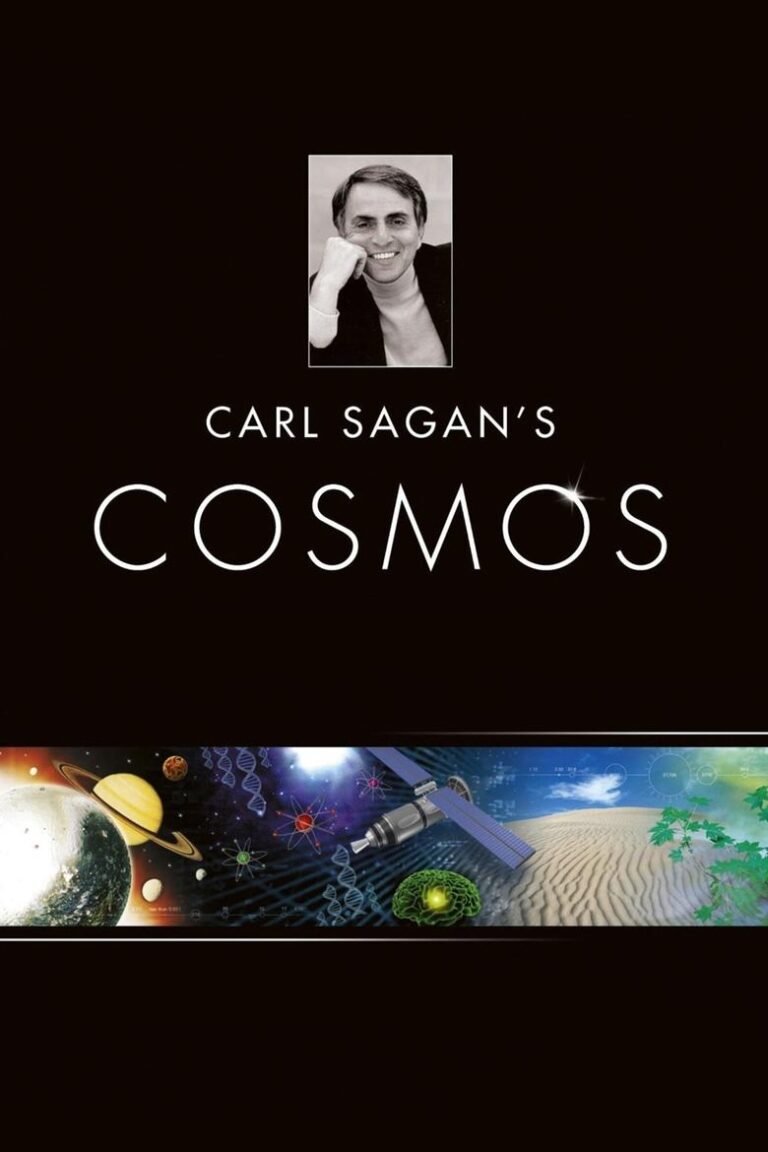
Cosmos: A Personal Voyage – Season 1 was a documentary series that first aired on PBS in 1980. The show featured astronomer Carl Sagan as the guide through a variety of scientific topics including the origin of life, the nature of the universe, and the history of human discovery. Carl Sagan used a clear, direct style to explain complex ideas like relativity and the evolution of stars to a general audience. The series utilized a unique set piece called the Ship of the Imagination to move between different points in time and space.
This production consisted of 13 episodes that covered the entire history of the universe. It used a device called the Cosmic Calendar to help viewers visualize the 15-billion-year history of the cosmos by condensing it into a single year. Each episode combined location filming, special effects, and historical reenactments to tell stories about scientists like Johannes Kepler, Christiaan Huygens, and Eratosthenes. The series remained a significant part of science communication for decades after its initial release on TV Shows networks around the world.
Why You Should Watch Cosmos: A Personal Voyage – Season 1
Cosmos: A Personal Voyage – Season 1 was a landmark in documentary television because it combined high-quality production values with rigorous scientific facts. The series did not just present data; it told a chronological story about how humans learned to observe the world around them. Carl Sagan offered a calm and authoritative presence that made difficult concepts accessible to families and students alike. The visuals, while dated by modern standards, provided a clear and effective way to see the scale of galaxies and the structure of atoms.
The series also spent a significant amount of time on the history of science. Instead of just talking about physics, Carl Sagan showed the lives of the people who discovered these laws. Viewers saw reconstructions of the Library of Alexandria and the streets of 17th-century Europe. This historical context helped explain why certain discoveries were made at specific times and how cultural shifts influenced scientific progress. The show maintained a focus on the importance of the scientific method and skeptical thinking.
Production Design and Visuals
The series used ground-breaking visual effects for the 1980s. The Ship of the Imagination allowed the camera to travel from the surface of Mars to the edge of a black hole. These segments were filmed using models and bluescreen technology that was advanced for the era. The production team also filmed on location in places like Egypt, India, and Japan to ground the astronomical discussions in human history. The use of a consistent musical score by Vangelis provided a distinct atmospheric tone to the entire season.
The script was written by Carl Sagan, Ann Druyan, and Steven Soter. They focused on using plain English to describe the laws of nature. They avoided technical jargon that might confuse the average person. This choice helped the series reach a global audience of hundreds of millions of people. The writing often highlighted the connection between the chemical elements found in human bodies and the elements created inside stars, a concept Carl Sagan often described using the term star stuff.
Educational and Cultural Impact
This series served as an educational tool for generations. It was used in classrooms to introduce students to astronomy and biology. The show did not limit itself to one field of study. It connected physics, chemistry, geology, and history into one single narrative. This interdisciplinary approach helped viewers see how different parts of science work together to explain the universe. The series also addressed the dangers of nuclear war and the need for environmental protection during the Cold War era.
The impact of Cosmos: A Personal Voyage – Season 1 can be seen in how modern science documentaries are filmed. It set the standard for using a single charismatic host to lead a series. The format of moving through space and time in a fictional vessel was used again in the 2014 follow-up series. Even decades later, the original season remains a primary example of how to make science interesting to a broad public audience without losing factual accuracy. You can find more details about the production on IMDb.
The Detailed Structure of the Episodes
Each of the 13 episodes focused on a specific theme. Episode one introduced the vastness of the universe and the Cosmic Calendar. Episode two examined the process of evolution and the development of life on Earth. Later episodes looked at the exploration of other planets, specifically focusing on the Viking missions to Mars and the Voyager probes. The series concluded with a look at the future of humanity and the importance of preserving the planet from technological threats.
The pacing of the show was deliberate. Carl Sagan took the time to explain each point clearly, often pausing to let the visuals sink in. This was a contrast to the fast-paced nature of many modern programs. The show encouraged viewers to think about their place in the universe. It presented the cosmos as a place that was both vast and understandable through human reason and observation. For those looking for classic Cosmos: A Personal Voyage content, this first season is the essential starting point.
Is Cosmos: A Personal Voyage – Season 1 Safe to Watch? (Age Rating Guide)
Official age rating not available.
| Director | Not available |
|---|---|
| Main Cast | Carl Sagan |
| Release Year | 1980 |
| Genre | Documentary |
Frequently Asked Questions
When was Cosmos: A Personal Voyage – Season 1 released?
Cosmos: A Personal Voyage – Season 1 was released on September 28, 1980.
What is Cosmos: A Personal Voyage – Season 1 about?
Cosmos: A Personal Voyage – Season 1 is available on Flixr.
Where can I watch Cosmos: A Personal Voyage – Season 1?
Official streaming platforms for Cosmos: A Personal Voyage – Season 1 have not been confirmed.