The Simpsons – Season 22 premiered on September 26, 2010, on the Fox network, continuing the legacy of the longest-running American sitcom. This season contains 22 episodes that navigate the domestic and social complexities of Springfield, utilizing the family unit of Homer, Marge, Bart, Lisa, and Maggie to mirror broader American cultural trends. The season is characterized by a high volume of guest appearances and a distinct shift toward parodying contemporary media phenomena such as the television series Glee and the 2010 tech-sector expansion.
The narrative structure of this season explores the maturity of long-standing characters while experimenting with new romantic and professional dynamics. Significant plot lines include Lisa exploring the world of performing arts and data-driven management, Bart becoming an award-winning filmmaker, and a significant shift in the personal life of Ned Flanders. The production maintains its established satirical edge, targeting industries ranging from pharmaceuticals to the animation industry itself, while also addressing the rising influence of social media and global entrepreneurship.
Production Context and Technical Evolution
By the time The Simpsons – Season 22 aired, the series had fully integrated into the high-definition era, which allowed for more complex visual gags and detailed background animation. This technical stability permitted the writers to experiment with diverse visual styles, such as the puppet-based segment in the episode The Fight Before Christmas featuring guest star Katy Perry. The production team also used this season to celebrate the show’s longevity, frequently referencing its own history while attempting to remain relevant in a rapidly changing digital landscape.
The writing staff, led by executive producer Al Jean, focused on narrative risks that challenged the show’s status quo. For instance, the decision to kill off a major recurring character like Fat Tony and replace him with a double was a move that both satirized the conventions of television continuity and allowed for a fresh exploration of Springfield‘s criminal underworld. This blend of structural experimentation and traditional situational comedy defined the production strategy for the 22nd year of the series.
Detailed Episode Analysis and Thematic Shifts
The season opener, Elementary School Musical, serves as a critique of the performative nature of early 2010s youth culture, specifically targeting the popularity of musical theater among adolescents. In this episode, Lisa visits an arts camp where she encounters characters voiced by Lea Michele, Cory Monteith, and Amber Riley. This guest-heavy approach reflected the season’s broader strategy of aligning the series with current media sensations to maintain demographic relevance.
Themes of economic ethics are prominent in the episode Loan-a Lisa. This narrative follows Lisa as she invests an inheritance into Nelson Muntz‘s bicycle business, providing a commentary on the ethics of venture capitalism and the Mark Zuckerberg era of tech disruption. The episode highlights the tension between Lisa‘s idealistic motivations and Nelson‘s pragmatic, often ruthless, business instincts. Key themes in Season 22 include:
- Technological Disruption: Episodes like Loan-a Lisa and MoneyBART analyze how statistics and social media platforms were beginning to alter traditional social and professional institutions.
- Media Satire: Angry Dad: The Movie offers an inside look at the animation industry, parodying the competitive and often pretentious nature of the Academy Awards.
- Romantic Evolution: The relationship between Ned Flanders and Edna Krabappel represented a major shift in character dynamics, moving away from isolated episodic plots toward a more serialized approach to character growth.
Character Motivations and Conflict
In MoneyBART, the conflict between Lisa and Bart is framed through the lens of data versus intuition. Lisa manages Bart‘s Little League team using advanced statistical analysis, a direct parody of the Moneyball philosophy. This episode explores Lisa‘s need for validation through academic and mathematical systems, contrasting with Bart‘s desire for the raw, uncalculated joy of the game. The tension reaches a peak when Lisa‘s rigid adherence to statistics conflicts with the unpredictable nature of human performance, forcing both characters to reconcile their differing worldviews.
The character of Homer Simpson continues to struggle with paternal responsibility, particularly in episodes like Homer the Father. Here, Homer attempts to model his parenting on 1980s television sitcoms, highlighting the disconnect between idealized media representations and the realities of modern family life. This thematic thread emphasizes the series’ ongoing critique of nostalgia and its influence on current social behavior. Homer‘s motivation remains grounded in a desire for simplicity, which is consistently thwarted by the complexities of the 21st-century Springfield environment.
Audience Engagement and Interactive Storytelling
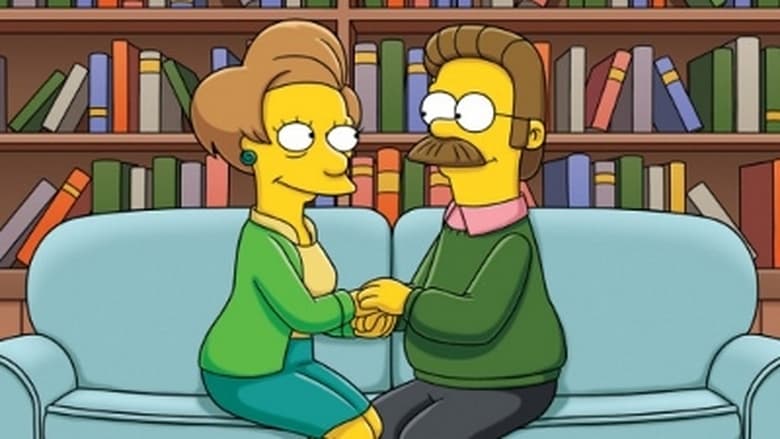
The season finale, The Ned-Liest Catch, introduced an interactive element rarely seen in the series. The plot focuses on Ned Flanders beginning a relationship with Edna Krabappel, a union of opposites that challenged both characters’ established traits. Ned‘s rigid religious morality is pitted against Edna‘s cynical, experienced outlook. The episode concluded with a cliffhanger that allowed viewers to vote online to determine if the relationship should continue into the following season, demonstrating an early attempt by the show to bridge the gap between traditional broadcasting and digital audience participation.
This move was significant as it acknowledged the power of the fan base in shaping the show’s continuity. The outcome of the vote eventually led to Ned and Edna becoming a permanent couple, a status that remained until the character of Edna was retired following the death of voice actress Marcia Wallace. This narrative experiment showcases how The Simpsons attempted to evolve from a purely episodic format into a more dynamic and responsive narrative structure during its 22nd year.
Why You Should Watch The Simpsons – Season 22
The Simpsons – Season 22 is a significant entry for viewers interested in the show’s transition into the modern digital age. It offers a unique combination of high-definition animation, experimental storytelling formats—such as the Katy Perry puppet segment—and a notable focus on changing the series’ long-term continuity through the Ned Flanders and Edna Krabappel relationship. The season successfully parodies the major cultural milestones of 2010, making it an effective time capsule of that era’s social and technological anxieties.
Official Rating: TV-PG for suggestive dialogue, infrequent coarse language, some sexual situations, and moderate violence.
Is The Simpsons – Season 22 Safe to Watch? (Age Rating Guide)
Official age rating not available.
Browse more curated picks in The Simpsons and TV Shows.
For verified credits, release details, or official resources, visit IMDb and Official Site.
| Director | Not available |
|---|---|
| Main Cast | Dan Castellaneta, Julie Kavner, Nancy Cartwright, Yeardley Smith, Hank Azaria |
| Release Year | 2010 |
| Genre | Animation, Comedy, Family |
Frequently Asked Questions
When was The Simpsons – Season 22 released?
The Simpsons – Season 22 was released on September 26, 2010.
What is The Simpsons – Season 22 about?
The Simpsons – Season 22 is available on Flixr.
Where can I watch The Simpsons – Season 22?
The Simpsons – Season 22 is available on Amazon Video, Apple TV, and Disney+.
Episode guide

Elementary School Musical
Marge sends Lisa to a performing arts camp, where counselors and fellow campers inspire her to embrace her creative side; upon returning to Springfield, Lisa grows restless with her boring suburban lifestyle.

Loan-a-Lisa
Grampa gives each family member a portion of his savings; Lisa worries that Nelson's instant success with a new business venture might lure him away from continuing his education.

MoneyBART
Lisa starts coaching Bart's Little League team; Marge and Bart spend the day at an amusement park, where former MLB manager Mike Scioscia gives Bart advice.

Treehouse of Horror XXI
Worried about the effects of violent video games, Marge encourages Bart and Milhouse to play board games; Lisa becomes smitten with a new student, a vampire; while on a second honeymoon, Homer and Marge rescue a castaway who escaped from his ship.

Lisa Simpson, This Isn't Your Life
Fearing that she will end up like Marge, Lisa pledges to focus solely on her academics and not get distracted by other things; Bart puts Nelson in his place and unintentionally earns the title of school bully.

The Fool Monty
Mr. Burns becomes distraught at the town's apathetic reaction to the announcement that he has only weeks to live; Bart secretly takes Burns into the family's home.

How Munched Is That Birdie in the Window?
After Bart nurses an injured bird back to health, Homer enters it in a race.

The Fight Before Christmas
When the rest of the family seems to lack Christmas spirit, Marge contacts Martha Clause.

Donnie Fatso
Homer ends up in the Springfield penitentiary after getting caught bribing an official; an FBI investigator offers Homer a way to reduce his jail time.

Moms I'd Like to Forget
Marge reconnects with a close group of mothers she used to be friends with; Bart tries to break up their group when his playdates stop being fun.

Flaming Moe
When Smithers transforms Moe's pub into a refined and trendy lounge, the establishment becomes Springfield's local gay hangout; Principal Skinner falls for the new, free-spirited music teacher.

Homer the Father
When Homer insists Bart must earn the new dirt bike he wants, Bart comes up with a scheme; James Lipton interviews a TV cast.

The Blue and the Gray
Moe attends a seminar in hope of gaining more confidence with women; Marge makes a change after discovering her gray hair.

Angry Dad: The Movie
Bart's film about an angry father quickly becomes a critical favorite, winning him several awards.

The Scorpion's Tale
During a field trip, Lisa discovers desert water that makes usually combative creatures get along; after getting kicked out of the retirement home, Grampa comes to live with the family.

A Midsummer's Nice Dream
When Cheech and Chong stop in Springfield while on their reunion tour, Homer impresses Cheech so much he asks him to replace Chong; Principal Skinner forms a new comedy team with Chong; Marge tries to help a hoarder.

Love Is a Many Strangled Thing
Marge persuades Homer to enroll in a fathering enrichment class; Bart becomes a school bully.
The Great Simpsina
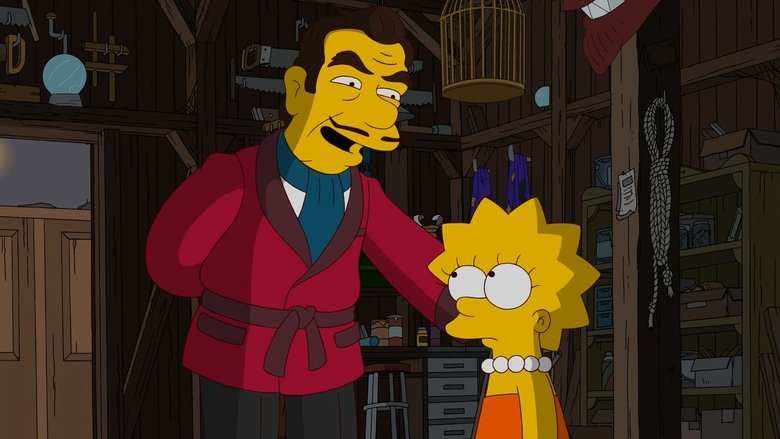
When the Great Raymondo takes Lisa on as his magician's assistant, she is conned into revealing the secret of his greatest trick to his nemesis.

The Real Housewives of Fat Tony
Fat Tony and Marge's sister, Selma, fall in love and get married; Bart discovers a special ability.

Homer Scissorhands
Homer opens his own hair salon after discovering he is a talented stylist; Milhouse professes his love for Lisa.

500 Keys
After finding the keys to every door in Springfield, Lisa finds a hidden room beneath the elementary school.
The Ned-liest Catch
When Ned starts dating Mrs. Krabappel, he is surprised to learn how many of Springfield's men she has been with.
Videos: Trailers, Teasers, Featurettes
Cast

Dan Castellaneta
Homer Simpson / Abe Simpson / Barney Gumble / Krusty (voice)

Julie Kavner
Marge Simpson / Patty Bouvier / Selma Bouvier (voice)

Nancy Cartwright
Bart Simpson / Nelson Muntz / Ralph Wiggum (voice)

Yeardley Smith
Lisa Simpson (voice)

Hank Azaria
Moe Szyslak / Chief Wiggum / Apu / Comic Book Guy / Carl (voice)

Harry Shearer
Ned Flanders / Mr. Burns / Smithers / Skinner / Lenny (voice)