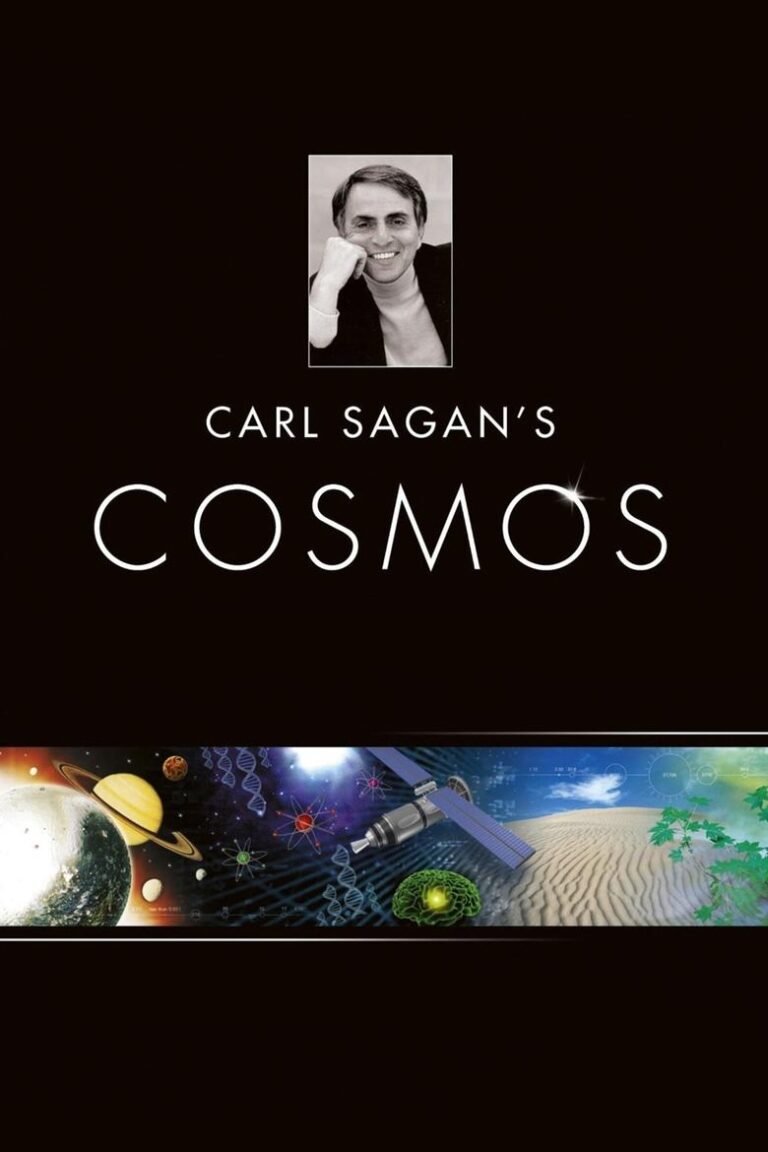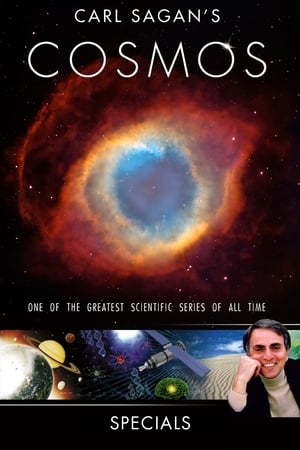
Cosmos: A Personal Voyage was a 13-part documentary television series that first aired on PBS starting on September 28, 1980. The program featured astrophysicist Carl Sagan as the lead presenter and co-writer, alongside Ann Druyan and Steven Soter. The series examined the history of science, the nature of the universe, and the origins of life on Earth through a mix of scientific facts and historical reenactments.
The show used a specific narrative device known as the Ship of the Imagination to take the audience to different parts of the galaxy and back in time. It covered a broad range of topics including astronomy, biology, physics, and history. The series was produced by KCET in Los Angeles and directed by Adrian Malone. It became one of the most successful TV shows in the history of American public broadcasting due to its ability to simplify complex scientific ideas for a general audience.
Why You Should Watch Cosmos: A Personal Voyage
Cosmos: A Personal Voyage stood out because it provided a comprehensive overview of human knowledge regarding the universe as it existed in 1980. Carl Sagan used clear language to describe the scale of space and the timeline of the universe, which he visualized through the Cosmic Calendar. The series documented the lives of historical figures like Johannes Kepler, Tycho Brahe, and Eratosthenes to show how scientific discovery progressed over centuries.
The Cosmic Calendar and Scientific Scale
One of the most used tools in the series was the Cosmic Calendar, which compressed the 15-billion-year history of the universe into a single year. In this model, the Big Bang occurred on January 1, and the entire history of human civilization took place in the final seconds of December 31. This method helped viewers understand the brief existence of humanity compared to the age of the stars.
Sagan also focused on the Ship of the Imagination, a white, petal-shaped vessel that allowed him to travel through the solar system. He visited planets like Venus and Mars, explaining their atmospheric conditions and the search for life. The show used special effects that were advanced for the early 1980s, including bluescreen technology to place Sagan inside astronomical simulations and historical settings.
Biological Evolution and the Origins of Life
The series examined biological concepts in the episode titled One Voice in the Cosmic Fugue. Sagan explained the process of natural selection and evolution by using the example of the Heike crabs from Japan. He showed how human intervention accidentally selected for crabs that looked like samurai faces, which demonstrated how environmental pressures change species over time.
He also explained the structure of DNA and the chemical composition of life. Sagan used the phrase “we are made of starstuff” to explain that the chemical elements in the human body were created inside the cores of dying stars. This connected the fields of astronomy and biology, showing that the history of life on Earth was tied to the history of the universe. These segments were filmed in various locations, including India and Japan, to provide a global context.
Historical Science and the Library of Alexandria
A significant portion of the show focused on the history of human thought and the preservation of knowledge. Sagan spent time discussing the Library of Alexandria in Egypt, which served as the center of learning for the ancient world. He explained how the loss of the library’s scrolls set back human scientific progress by centuries. This was used as a factual warning about the fragility of human knowledge and the importance of maintaining scientific records.
The series also looked at the transition from astrology to astronomy. It detailed how Johannes Kepler discovered the laws of planetary motion while working with Tycho Brahe. The show presented these figures as real people with personal struggles, rather than just names in a textbook. By doing this, Cosmos: A Personal Voyage framed science as a human activity driven by curiosity and rigorous observation.
Planetary Exploration and Environmental Concerns
In the episode Heaven and Hell, the show looked at the planet Venus. Sagan explained the runaway greenhouse effect on Venus, where high levels of carbon dioxide trapped heat and made the surface hot enough to melt lead. He used this as a direct comparison to Earth, warning that human activities could potentially alter the climate in similar ways. This was one of the earliest instances of a major television program discussing climate change and its planetary risks.
The series also examined the Mars missions, specifically the Viking landers. Sagan showed the data returned from the Martian surface and explained why the search for life was difficult. He examined the possibility of microbial life and what it would mean for our understanding of biology if life had started twice in the same solar system. The show updated some of its information in later home video releases to reflect new data from the Voyager missions.
The Voyager Missions and the Dutch Golden Age
Episode 6, Travelers’ Tales, compared the Voyager 1 and Voyager 2 missions to the voyages of discovery during the Dutch Golden Age. Sagan traveled to The Netherlands to talk about the history of mapmaking and telescope development. He drew parallels between the sailors who explored Earth’s oceans and the robotic probes exploring the outer planets. This section highlighted the technological achievements required to send cameras to Jupiter and Saturn.
The show featured images sent back by the Voyager spacecraft, which were the first high-resolution photos of the outer moons. Sagan explained the importance of the Golden Record, a message from Earth that was attached to the spacecraft. He discussed the selection of sounds, music, and images included on the record, which was intended to represent humanity to any extraterrestrial civilization that might find it in the distant future.
Nuclear Proliferation and Global Survival
The final episode, Who Speaks for Earth?, took a factual look at the danger of nuclear weapons during the Cold War. Sagan discussed the total number of nuclear warheads on the planet and the destructive potential of a global conflict. He explained that humanity had reached a point where it had the power to destroy itself, and the survival of the species depended on global cooperation.
He returned to the Library of Alexandria theme to show what would be lost in a nuclear war. The series ended with a focus on the shared history of all humans and the need to protect the planet. It emphasized that there was only one Earth and that its inhabitants were responsible for its future. You can find more information about the show’s impact on science communication at IMDb.
Is Cosmos: A Personal Voyage Safe to Watch? (Age Rating Guide)
Official age rating not available.
| Director | Carl Sagan |
|---|---|
| Main Cast | Carl Sagan |
| Release Year | 1980 |
| Genre | Documentary |
Frequently Asked Questions
When was Cosmos: A Personal Voyage released?
Cosmos: A Personal Voyage was released on September 28, 1980.
Who directed Cosmos: A Personal Voyage?
Carl Sagan directed Cosmos: A Personal Voyage.
What is Cosmos: A Personal Voyage about?
Carl Sagan covers a wide range of scientific subjects, including the origin of life and a perspective of our place in the universe.
Where can I watch Cosmos: A Personal Voyage?
Official streaming platforms for Cosmos: A Personal Voyage have not been confirmed.