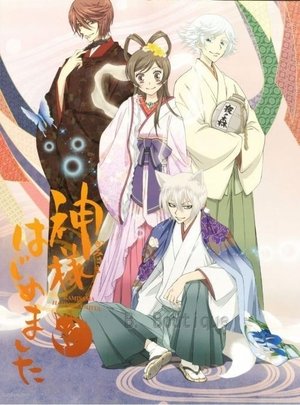




Kamisama Kiss is a supernatural romantic comedy series that originally aired in 2012, based on the manga by Julietta Suzuki. The story followed Nanami Momozono, a high school student whose life changed when her father abandoned her due to massive gambling debts. After being evicted from her home, Nanami encountered a mysterious man named Mikage in a park, whom she saved from a stray dog. As a gesture of gratitude, Mikage transferred his title of Land God to her by kissing her forehead and told her to live at his shrine. This event pulled her into a world of spirits, yokai, and divine duties that she was completely unprepared to manage alone.
The central hook of the series involved the friction between Nanami and Tomoe, a cynical fox demon who served as the shrine’s familiar. Tomoe was initially furious that a mere human replaced his former master and refused to acknowledge her authority. To make him her familiar, Nanami had to seal a contract with a kiss, a task she eventually completed out of necessity. The narrative detailed her attempts to learn the responsibilities of a deity, such as performing sacred dances and granting the wishes of local residents, while dealing with various supernatural entities who either wanted to serve her or steal her new power. The show balanced these divine chores with the everyday reality of a teenager trying to finish school.
Is Kamisama Kiss Safe to Watch? (Age Rating Guide)
Rated TV-PG.
Why You Should Watch Kamisama Kiss
Kamisama Kiss provided a distinct look at Japanese folklore by mixing traditional Shinto mythology with a modern high school setting. The character growth was the primary engine of the series, as Nanami Momozono transitioned from a helpless student to a capable, if still learning, deity. Unlike many protagonists in the genre, Nanami relied on her empathy and social intelligence rather than physical combat to resolve conflicts between spirits. This approach gave the series a lighter tone while still allowing for significant stakes during encounters with more aggressive yokai or rival gods.
The dynamic between Nanami and Tomoe served as the emotional foundation of the episodes. Tomoe was a complex character who harbored a long and violent history as a wild fox before being tamed by the previous god. His transition into a domestic protector and his eventual begrudging respect for Nanami created a slow-burn narrative. The production by TMS Entertainment utilized a soft color palette and detailed character designs that emphasized the contrast between the mundane human world and the ornate, often chaotic spirit world. The series also introduced a wide variety of secondary characters that expanded the scope of the setting.
The Hierarchy of Spirits and Deities
The world-building in Kamisama Kiss focused heavily on the hierarchy of the spirit realm. At the Mikage Shrine, Nanami was assisted by two small shrine spirits, Onikiri and Kotetsu, who provided historical context and performed household chores. Outside the shrine, the show introduced characters like Kurama, a crow tengu from the mountains who lived as a famous human pop idol. Kurama initially acted as an antagonist, attempting to consume Nanami’s heart to gain her godhood, but he eventually became a recurring ally. These interactions showed how spirits integrated into human society while maintaining their own internal politics.
Another major figure was Mizuki, a white snake spirit who became Nanami’s second familiar. Mizuki came from a shrine that had been lost to time, leaving him lonely and desperate for a connection. His inclusion in the household added a new layer of tension, as his playful and manipulative nature often clashed with Tomoe’s sternness. The series used these characters to illustrate the different ways spirits related to humanity, from Kurama’s exploitation of celebrity to Mizuki’s desire for a shared spiritual bond. These subplots ensured the story remained varied beyond the main romance.
Challenges of the Land God Role
The tasks assigned to Nanami were not just symbolic but required genuine effort and ritual knowledge. She had to attend festivals in the spirit world, such as the gathering of the gods at Izumo, where she felt out of place among ancient deities. These sequences provided insight into the vastness of the mythology the show inhabited. She also faced threats from the Dragon King, Ryuo Sukuna, who held a grudge against Tomoe for stealing his eye hundreds of years prior. This historical conflict forced Nanami to take responsibility for her familiar’s past actions, deepening her commitment to her role.
Production-wise, the direction by Akitaro Daichi balanced slapstick humor with serious mythological drama. The animation maintained a high standard for 2012, particularly during the sequences involving traditional rituals or supernatural transformations. The soundtrack, featuring music by Hanae, complemented the whimsical yet slightly melancholy atmosphere of the shrine. By grounding the magical elements in Nanami’s daily struggles, the show remained accessible to viewers interested in both TV shows about school life and those focusing on high fantasy and legend.
Romantic Progression and Narrative Stakes
The romance in the show avoided immediate resolution, focusing instead on the barriers between a human and a yokai. Tomoe often reminded Nanami that romantic love between their species was taboo and historically ended in tragedy. This created a consistent tension that drove the plot forward during the more episodic segments. The series also touched on themes of obsolescence, as shrines without gods eventually disappeared. Nanami’s presence was the only thing keeping the Mikage Shrine relevant in a modern world that had largely forgotten the old ways.
As the series progressed, Nanami gained more supernatural tools, such as her white paper talismans which allowed her to manifest her will into physical effects. These abilities grew as her confidence increased, showing a clear progression in her character arc. The show succeeded by making the stakes personal; the danger was not just about physical harm, but about losing the new family Nanami had built at the shrine. This mixture of domestic stability and supernatural unpredictability made the series a staple of its genre during its original run on networks like TV Tokyo.
For verified credits, release details, or official resources, visit IMDb and Official Site.
| Director | Not available |
|---|---|
| Main Cast | Yui Horie, Suzuko Mimori, Daisuke Namikawa, Daisuke Kishio, Satomi Sato |
| Release Year | 2012 |
| Genre | Animation, Comedy, Sci-Fi & Fantasy |
Frequently Asked Questions
When was Kamisama Kiss released?
Kamisama Kiss was released on October 2, 2012.
What is Kamisama Kiss about?
Kamisama Kiss is a supernatural romantic comedy series that originally aired in 2012, based on the manga by Julietta Suzuki. The story followed Nanami Momozono, a high school student whose life changed when her father abandoned her due to massive gambling debts.
Where can I watch Kamisama Kiss?
Kamisama Kiss is available on Amazon Video, Crunchyroll, and Crunchyroll Amazon Channel.